Mother to millennials. Woman with lived experience of mental illness and homelessness. Peer Facilitator/Patient Advisor/Public Speaker/Mental Health Advocate. #FACES19
I have noticed a commonality among friends, family and acquaintances. Those who compare themselves to others are less joyful, or even miserable as a result.
In fact, comparing ourselves to others is something we all tend to do at some point. Here are some examples:
The friend who says (not jokingly), I’ll trade you places, you can live at my home and I’ll live in yours.
The neighbour who thinks you have so many more friends than they do.
The family member who compares their “meager” earnings for hard work to your executive salary, or your government job with a pension.
The acquaintance who envies your car, boat and/or cottage.
The friend who has several health problems and wishes they were as healthy as you are.
Comparison is truly the thief of JOY. The truth is you are ALWAYS going to find others in your life who…
Not too long ago, my friend and I were out on a walk and she mentioned to me that she always listens to John Tesh (www.tesh.com), and heard him say that “if you want to maintain a healthy marriage, it really is the little things that count.”
This hit me, and I stopped in my tracks exclaiming, “isn’t that the truth!” Both my friend and I are on our second marriages to absolutely wonderful men. We both agreed that we’ve got it right the second time around and that we both found that in our respective marriages, there is a mutual give and take.
I know that I’m frequently doing “little things” for my husband like giving spontaneous hugs and kisses, offering encouraging words, picking up some favourite treat, or baking for him, cooking meals he’ll appreciate, and so on. But, my husband does the same for me, taking me out for dinner, offering to prepare and deliver cups of coffee or soda water (regularly), cleaning up around our home, buying me a favourite piece of jewellery or perfume, etc.
My friend said it is the same with her and her husband.
John Tesh says, “what really separates happy couples from the unhappy, is the 5 to 1 ratio. As long as there are five times more positive feelings and interactions than negative ones, the marriage is likely to be stable. That’s because we tend to remember the negative more so we need more positive experiences to outweigh the bad ones. If it was one for one, all we would remember are the bad times.
But (he continues) don’t think one large positive experience will make up for a bunch of bad ones. A big positive, like a weekend away, doesn’t have as much impact on the brain as frequent small good experiences like going to a favourite restaurant every Sunday.”
So, in your relationships, do your best to think of the small things to do for your partner. They really do add up to creating a loving and happy marriage.
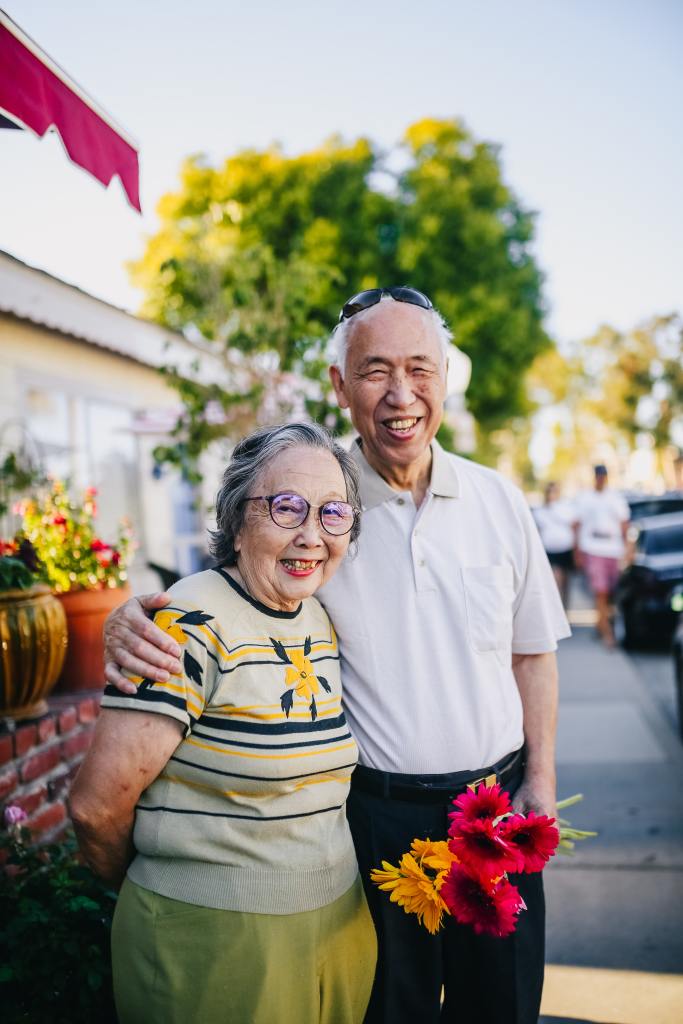
Buying flowers for your partner and other little things, add up BIG TIME.
Who’s watching the Olympics? What an absolute thrill to see so many Canadians winning medals– and I cannot help but mention that 99% of them are women! What incredible heroes– all of the competitors, not just those who arrive on the podium.
Of course, we cannot talk about mental health and the 2021 Olympic games in Tokyo, without mentioning Simone Biles. This 24-year-old gymnast from the U.S. made a brave and courageous decision to not compete in the women’s team final.
Unlike what some trolls are saying, Simone is not “a quitter” or “letting her country down”, she is being honest about her mental health by saying “the mental’s not there”, after losing her spatial awareness in a twist that she’d done thousands of times before.
Simone Biles has proven to be the utmost mental health advocate and is a great role model for other Olympians and aspiring athletes around the world. She knew she was not ready to compete for fear of injury (have you seen what those gymnasts actually do in competition?), so she spoke up and stood on the sidelines (at the Olympics, when she’d been training her whole life for this moment!) cheering on her teammates.
What a hero, and what a champion to advocate for mental wellness on the world stage.
My former sister-in-law, Olympic Silver medalist in figure skating (Calgary 88), Elizabeth Manley says it best in her recent video on Instagram. Follow her @lizmanley88 and check out her video on Simone Biles.
Mental Health is, and should be treated the same as physical health. If Simone had broken an ankle on that twist, we would not have expected her to compete. Why then, do some people feel she should compete when she is not feeling mentally fit?
In other good news, I just heard today that Simone will return to compete in the balance beam final tomorrow. (Update– she won the Bronze medal!) I know that I will be cheering her on, as well as most of the world — save for a few mean-spirited trolls.
Take care of your mental health folks! You are worth it!
Simone Biles is the ultimate mental health advocate at the 2021 Tokyo Olympics!
Tay Gendron is a Holistic Nutritionist (CNP, NNCP) and yoga teacher who helps women fix their gut and balance their hormones so they can Break Up with their Anxiety for good.
The health of your gut plays an absolutely massive role in how well your brain functions, how your body produces hormones, neurotransmitters, vitamins, minerals, and other compounds critical for keeping your mood and mental health balanced, and keeping anxiety far, far away.
But, and this is a big but, gut health isn’t just important for mental health. The gastrointestinal tract is home to trillions of bacteria that play a major role in how well (or not well) your body functions. Good gut health is the cornerstone of your entire body’s function and I’ll go so far as to say that you can’t have a healthy body without having a healthy gut (and I know I’d get backed up on that one…). If you’re experiencing chronic pain, look at your gut. Headaches, look at your gut. Fatigue, poor sleep, poor digestion (obviously), look at your gut. It’s where everything traces back to and you can’t have one without the other.
So you can see just how important gut health really is, take a look at what can happen if you have what is called dysbiosis (imbalanced gut microbiome):
● Inflammation ● Poor digestion ● Joint and muscle pain ● Autoimmune diseases ● Immune dysfunction ● Cancer ● Metabolic dysfunction ● Mental health conditions
That doesn’t cover all of it, but you can see how each of these categories is the umbrella for several other conditions. So, if your gut isn’t a healthy place, the risk of developing any number of these conditions increases exponentially.
I’ve dealt with my fair share of gut health imbalances and it’s led me to really hone in on helping women fix up their gut and hormones through foods and holistic lifestyle practices. Through countless struggles, experiments, and a whole ton of research, I’ve learned about the incredible and crazy strong link between gut health and mental health. This is why cultivating a healthy and balanced gut is the cornerstone of my practice. I work exclusively with women with anxiety and you cannot have mental health without gut health.
Here’s a quick explanation of the link I’m talking about.
If you’re trying to eliminate anxiety, you have to look at two things–neurotransmitters and hormones. When balanced, they lead to a balanced mental state, but when imbalanced, they can lead to disaster in the form of severe anxiety and other chronic health conditions. But where anxiety is concerned, your gut shines.
That’s for a couple reasons: ● More than 90% of serotonin (your happy neurotransmitter) is produced in the gut by your gut bugs, so you need to keep your gut bugs happy! ● Dietary protein provides essential amino acids for forming neurotransmitters (serotonin, dopamine, GABA). You need enough stomach acid to properly digest and absorb protein. ● Dietary fat is the building blocks for hormone synthesis (estrogen-progesterone balance is key for regulating mood and neurotransmitter synthesis). You need a well-functioning liver to properly digest and absorb fat.
And that doesn’t even touch on inflammation. If your gut isn’t healthy, chances are that you are struggling with some semblance of leaky gut, which means that the gut lining that should be completely sealed and impermeable develops small micropores that allow food particles to leak through. Because your body doesn’t recognize these food particles that aren’t in their simplest form, it sets off alarm bells and your immune system responds by triggering the inflammatory cascade.
Inflammation of the gut stresses the microbiome through the release of cytokines and neurotransmitters, and when coupled with intestinal permeability means these inflammatory molecules can now travel systemically and interfere with the permeability of the blood-brain barrier. Release into the brain influences brain function and leads to mood disorders and imbalances like anxiety, depression, and memory issues.
That’s a pretty simplistic way of looking at it, but it all stems from your gut. When there are imbalances present, it interferes with your entire body function, not just your brain. And it’s why for me, getting my clients gut health under control is the key to eliminating their anxiety and any other existing health conditions.
If you’re reading this and have no idea where to start my Gut Health for Mental Health EBook walks you through the three pillars of optimizing gut health.
And remember — gut health isn’t just important for mental health, when you can clean the gut, you can clean up body-wide health!
Tay Gendron teaches us all about gut health in this week’s Guest Blog. Follow Tay on social media and check out her website and EBook.
I’m tired and stressed out about many things, including taking the elevators in my building. I really dislike being “that person” who says “sorry, no, you cannot get on the elevator.” (Public Health rules state: “one person per elevator unless you are from the same household”). Too often, I encounter some very rude and upset people who are in a hurry to get somewhere, and they say something nasty.
But, having had both vaccines… and with restrictions moving into Step 2 in Ontario, I’m beginning to feel hopeful. Just yesterday, I received a photo of my friend’s family up at her cottage. There, sitting on one couch, all together, were: my friend (in her fifties), her 95 year old mom, and her son and his pregnant wife– sitting tightly together with big smiles on their faces and — no masks! WOW! What a great picture! For me, it represented hope! They had all been double vaccinated.
On July 1, my husband’s birthday, we will be gathering as a family of 4 (from 3 different households), and depending on the weather, we may all be indoors. Imagine – indoors… with family, sharing a meal, without masks! WOW! It has been a very long time.
Businesses are starting to open up, patios and soon restaurants will be open for indoor dining and — live music!! This is all very exciting and hopeful. The more people get vaccinated, the more freedom we’ll have.
Let’s not mess this up! Continue to follow public health guidelines by wearing a mask in doors in public areas and staying 2 meters apart. Continue washing your hands with soap and water (while singing happy birthday — twice). I’m sure that all of you, like me, do not want to go backwards with restrictions at any point in the future. I know that I am very much looking forward to getting on a plane to visit my new grandchild. Please, follow guidelines so that we all will be free to travel and resume a somewhat normal life.
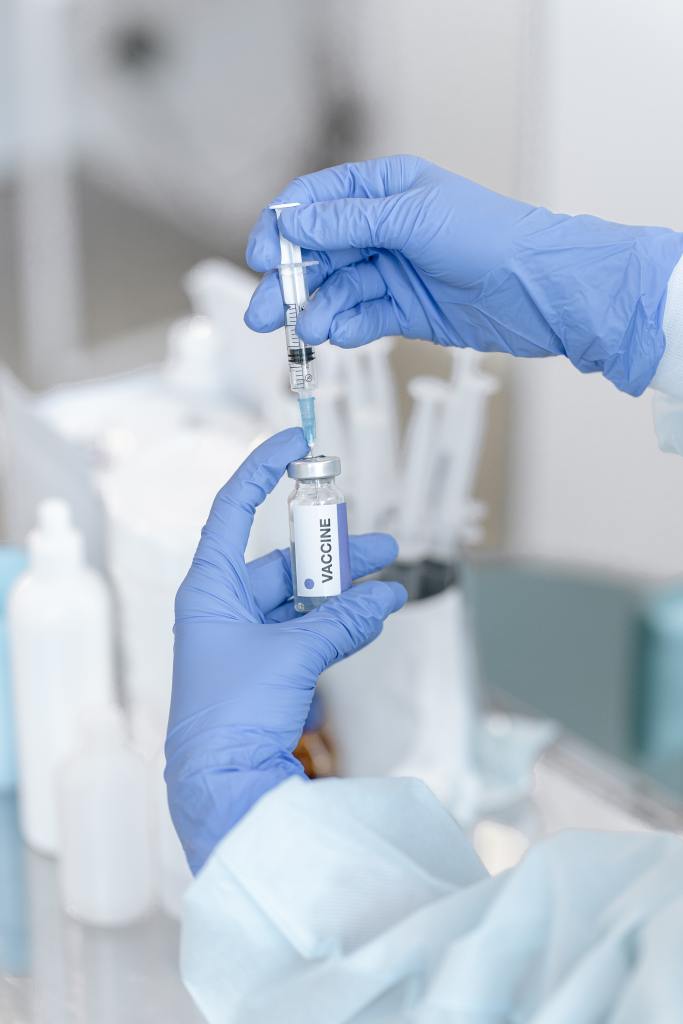
This is our shot! Get vaccinated! Wear a mask! Stay 2 meters apart and continue washing your hands. Now is not the time to be lax with any of these measures.
The vaccine is like a dose of hope for our future.
Take good care, Canada! This is our shot!
The COVID vaccine is like a dose of hope for our future.
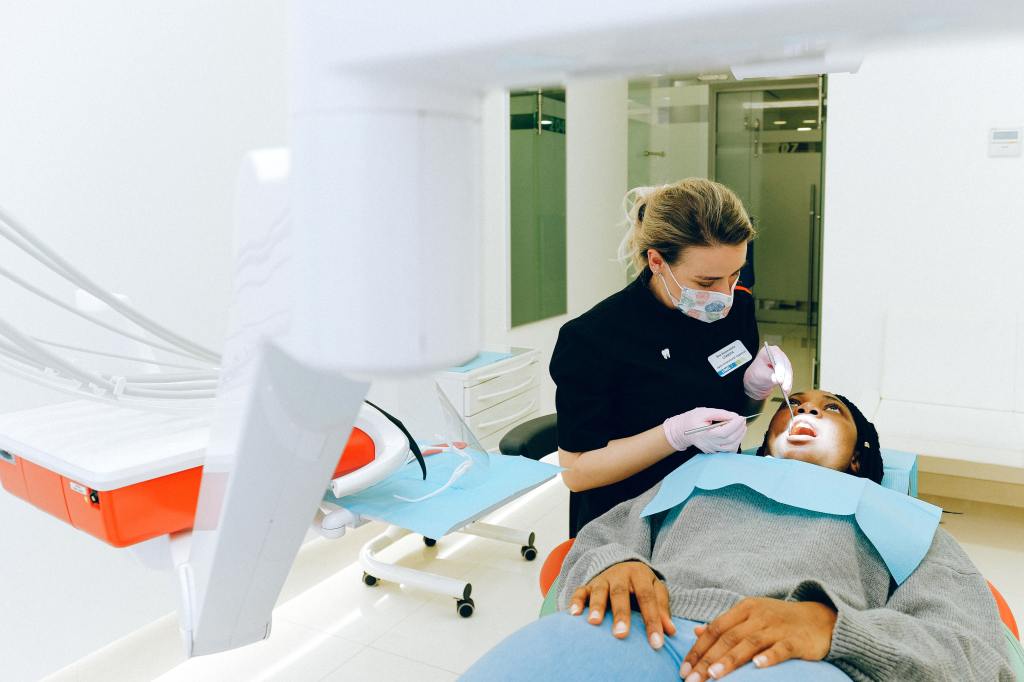
Recently, I had a dentist appointment. I love my dentist, Dr. Chris Granger, and my dental hygienist, Holly. On this visit, I learned some very interesting and important things about oral hygiene.
Did you know that by using whitening toothpaste too often, you can actually make your teeth yellow? No kidding. Holly says that the whitening toothpastes are too abrasive and wear away the enamel (the hard layer of the tooth). Dental enamel covers the softer yellowish dentin layer of the tooth. As the enamel wears away, it will expose the dentin underneath. True story! If you do want to whiten your teeth, Holly recommends Crest Whitening strips. Hydrogen peroxide (its main ingredient) can remove dental stains safely when used as directed.
Did you know that flossing your teeth regulary (every day or every second day) is important– and, not just for the removal of food? I did not! I thought, oh– I don’t have food stuck between my teeth– no need to floss. Not so, says Holly. “You should be flossing regularly to clear your gums from the build-up of harmful bacteria.” I’ve since learned that just brushing often isn’t enough to remove plaque and prevent cavities. Also, floss can get into tight spaces and remove 80% of plaque. (I should tell you that I’ve never had a cavity in my lifetime. I believe that this is the reason I’ve been so lazy about flossing.)
I’ve also learned that, if left untreated, bacteria in an unhealthy mouth can actually harm the rest of your body. Gingivitis (gum disease) can enter the bloodstream and travel to other parts of the body, leading to heart disease, diabetes and respiratory illnesses. (1)
So, since flossing only takes a couple of minutes out of my day, but will have huge benefits for my long-term health– not only my dental health– guess who’s flossing everynight before bed? ME! My goal is to not only make Holly happy at my next appointment, but to improve my dental health as well. Holly says I have several spots of swollen and bleeding gums. She also tells me that with regular brushing and flossing, this can be reversed!
Holly even encouraged me to set up a reminder on my phone. No excuses!
I hope this post encourages you to brush and floss regularly, too. Oh, and I forgot to mention how much money you could save at the dentist!
But wait a minute– you might be saying– what does this post have to do with mental health? Well, many people have anxiety associated with dental appoitnments. For me, I think going to the dentist is so much fun, that I booked my next appointment on my birthday! I get that I’m a little peculiar.
I imagine many of you are way ahead of me in the flossing game. At 56, I’m definitely “late to the party”. Let me know in the comments! I love to hear from you guys.
This is a difficult topic for me to write about, as it is very personal and will reveal many details of my symptoms and beliefs when I was mentally unwell for about 10 years (a gradually worsening illness). It makes me feel very vulnerable– but, I’m told that there is strength in vulnerabilty. I’m hoping that by writing about it, I will help educate people about delusions — a form of psychosis.
Beginning in the early 2000s, I started having delusions. Although previously diagnosed with bipolar disorder, I had never experienced delusions in my life before then. I have since learned that delusional disorder, although rather rare– usually appears in middle to late life.
Erotomanic. Someone with this type of delusional disorder believes that another person, often someone important or famous, is in love with him or her. The person might attempt to contact the object of the delusion, and stalking behaviour is not uncommon.
Grandiose. A person with this type of delusional disorder has an over-inflated sense of worth, power, knowledge, or identity. The person might believe he or she has a great talent or has made an important discovery.
Jealous. A person with this type of delusional disorder believes that his or her spouse or sexual partner is unfaithful.
Persecutory. People with this type of delusional disorder believe that they (or someone close to them) are being mistreated, or that someone is spying on them or planning to harm them. It is not uncommon for people with this type of delusional disorder to make repeated complaints to legal authorities.
Somatic. A person with this type of delusional disorder believes that he or she has a physical defect or medical problem.
Mixed. People with this type of delusional disorder have two or more of the types of delusions listed above.
As for me, I would have been categorized as ‘mixed’.
Although for many years I could socialize and function quite normally, I strongly believed that my former psychiatrist loved me (I was in love with him, too). I believed that he was communicating with me through other people (my friends, family and even strangers), through transceivers that everyone had implanted in their ears– and, through songs on the radio. I also believed that there were cameras in my home and car and that people who I knew, but could not see, (known as my angel family) were watching me. I also had an inflated sense of self. So basically, my ‘mixed’ delusional state included: erotomanic, grandiose and persecutory– for years!
It was so difficult living in this constant state of confusion and eventually I became so preoccupied with these delusions that it caused major disruption in my life– eventually, I lost my job, access to my beloved children, all family and friends, and ultimately became homeless.
Now, after receiving proper intensive care, treatment and medication at The Royal, I’m happily living in recovery. On December 1st of 2021, I will have been living in my beautiful little apartment that I got the keys to 10 years prior. I’m so thrilled that my delusional thinking is behind me– and, I’m leading a fulfilling and healthy life. I’m reunited with my daughters, I’m in a loving relationship with my partner, and my eldest daughter is expecting our first grandchild very soon. I am beyond grateful to be fully present… in my current life.
Recovery is possible! Even from serious mental illness. There is always hope and it helps when people around you believe that you can get better.
Denmark was marked as second on the list of the world’s happiest countries in 2020 and has been in there for the past few years. Did you know that there is actually a Happiness Research Institute in Copenhagen? I didn’t! What an awesome thing to have.
The very first World Happiness Report came out April 1, 2012 and has since been released on an annual basis. In 2021, Canada faired pretty well, placing 15th.
Back to the Danes…Meik Wiking, the CEO of the Happiness Research Institute in Copenhagen says that Denmark is one of the happiest countries due to its practice of hygge (pronounced HOO-gah). “The Danes are exceptionally good at decoupling wealth and well-being,” he says. “We focus on the small things that really matter, including spending more quality time with friends and family and enjoying the good things in life.”
This article outlines all you need to know about the practice of hygge, the Denmark way! Have a read. I really enjoyed it.
I know that I feel so much better after a walk in nature with my family or friends. Also,I love curling up on the couch with a blanket and air-popped popcorn (with butter!) next to my husband to watch a movie.
Perhaps you can practice hygge yourself! Get out the cozy, woollen socks. Let me know how it goes!
Reading a book by candlelight is totally hyggelig. Give it a try! Perhaps you already do this? Let me know.
How many times have you been in a really dark place, feeling like the pain will never end? Unbearable pain, unacceptable anguish, intolerable emotions. I’ve been there too! Although, with both age and experience on my side, I have learned that even the darkest days do come to an end, and brighter times are on the horizon. This too shall pass.
I want you to know, that if you are suffering and in pain, life is worth sticking around for. I almost ended it all when I was in my early 20s, but with my parents help, I began to see that life really was worth living. Despite the pain and anguish I was feeling, I got help. Am I ever glad I did. Through therapy and some practice, I eventually learned to love myself and began to see what I thought of as failures, as setbacks instead. Fast-forward to present, I have two wonderful daughters and a grand baby on the way! And, after many years of waiting, I’m in a solid mutually loving and respectful relationship with my partner, Ron. Imagine all I would have missed if I had actually ended my life on that fateful day in my 20th year.
If you are having thoughts of suicide, please reach out for help! You are worth it! In Canada call: 1-833-456-4566. In the US call: 1-800-273-8255.
I know I am so fortunate to be around today, living my best life. I laugh often (something I couldn’t even imagine during my darkest days), I have lots of good friends, and despite COVID, I manage to keep in touch with them via email, phone calls and video chats. During our most recent lockdown in Ottawa, Canada, my husband invented the term “talkie walkie” for the walks I take on my own, while talking to one of my friends on the phone (as they walk in their own neighbourhood). Apart, but together in spirit. My life is now full of connection and support. Something I did not have for years while I was homeless or in my early 20s.
This too shall pass, also applies to the reverse circumstances. When times are really good… you may be enjoying a perfect day: remember, this too shall pass, and savour the great moments in your life.
I wanted to write this post to remind everyone that life truly is worth living. The hard times will pass and like rainy days, the sun will eventually come out to shine again. I’ve been there, and I know that holding on and working through the pain was the best decision I made. H.old O.n P.ain E.nds. HOPE. There is always HOPE. Even if you do not feel hopeful, I’m holding onto that hope for you! My parents held onto HOPE for me during my darkest days and thank goodness they did.
Reach out for help and support when you need it. You’ll be glad you did. Your loved ones will be too! This too shall pass.
Do you remember the last time you sobbed uncontrollably? How about when waiting for medical results and you felt incredibly anxious? Or the last time you laughed out loud? These are just a few examples of some emotions (sorrow, anxiety, or happiness) which are so important to be able to recognize. Being able to define your emotions is an important part of living.
Last week was Mental Health Week in Canada, and the Canadian Mental Health Association (CMHA) came out with a campaign called “Name it, don’t numb it! #GetReal about how you feel.” I thought this was a very effective message for people to get in touch with their emotions. When we experience things like stress, grief or sadness, it is important to process these emotions and not supress them.
In the “Journaling as a Wellness Tool” group I co-founded, we have a week dedicated to expanding our emotional vocabulary. The intent in doing so, is that it is thought that the better able you are to describe the emotions you are feeling, the better equiped you will be at coping with these emotions.
There are some tips to manage our emotional wellness (by Elena Mikhaylova, PhD Psychology and Registered Psychotherapist):
Trust yourself
Listen to your emotions
Reflect on your emotions: journaling can help!
Explore what makes you happy and what doesn’t
Learn to express your emotions in an appropriate way
Differentiate yourself from material objects: a fancy car and big house don’t make us happy.
Connect with a mental health professional: especially if emotions are painful or hard to deal with.
Because of COVID-19, emotional well-being has decreased for a lot of people. Get in touch with your emotions today! How are you feeling? Name it. Write about it. Allow yourself to feel each emotion. Don’t numb it!
When was the last time you laughed out loud with a friend?





 Mighty M0use for Mental Health